
About
A firm that runs on the technology it builds and the research it publishes.
Mission
To help investors build a better future, with the peace of mind of relying on structure, not hope.
That means seeking real diversification and better risk-adjusted returns while protecting capital, with investment processes and tools grounded in scientific research, discipline, intellectual honesty and robust frameworks.
Athena Quantitative Strategies does this in three ways: it deploys its own quantitative strategies in its clients' portfolios, gives access in its software to a structured framework and quantitative models, and publishes its research and market analysis.
Philosophy
Markets are complex adaptive systems. Athena does not try to predict them: it seeks to understand their structure, measure their behaviour and operate within limits built to last.
Its philosophy rests on three ideas: empirical evidence supports every investment thesis; risk management is a firm's most important capability; and intellectual honesty, including the willingness to be wrong, is the condition for enduring.
Standards
- Own software
- Athena builds its own research, risk and execution software: it trades with Athena QS Console and researches with Athena QS Studio.
- Written criteria
- Source of edge, size, risk budget, exit and portfolio role, written down before a strategy receives capital.
- Risk Culture
- Every order is checked against written limits before it is sent; every day, the records are reconciled with the broker's.
- Intellectual Integrity
- Athena subjects its own models and assumptions to the same scrutiny it applies to markets: every quarter, five tests with written thresholds and consequences.
- The client's account
- In the client's name at Interactive Brokers, which issues the statements.
Leadership
The founder
Areas of Focus
- Interest Rate & FX Derivatives
- Quantitative Research and Systematic Strategies
- Risk Architecture & Portfolio Management
- Execution Infrastructure & Technology
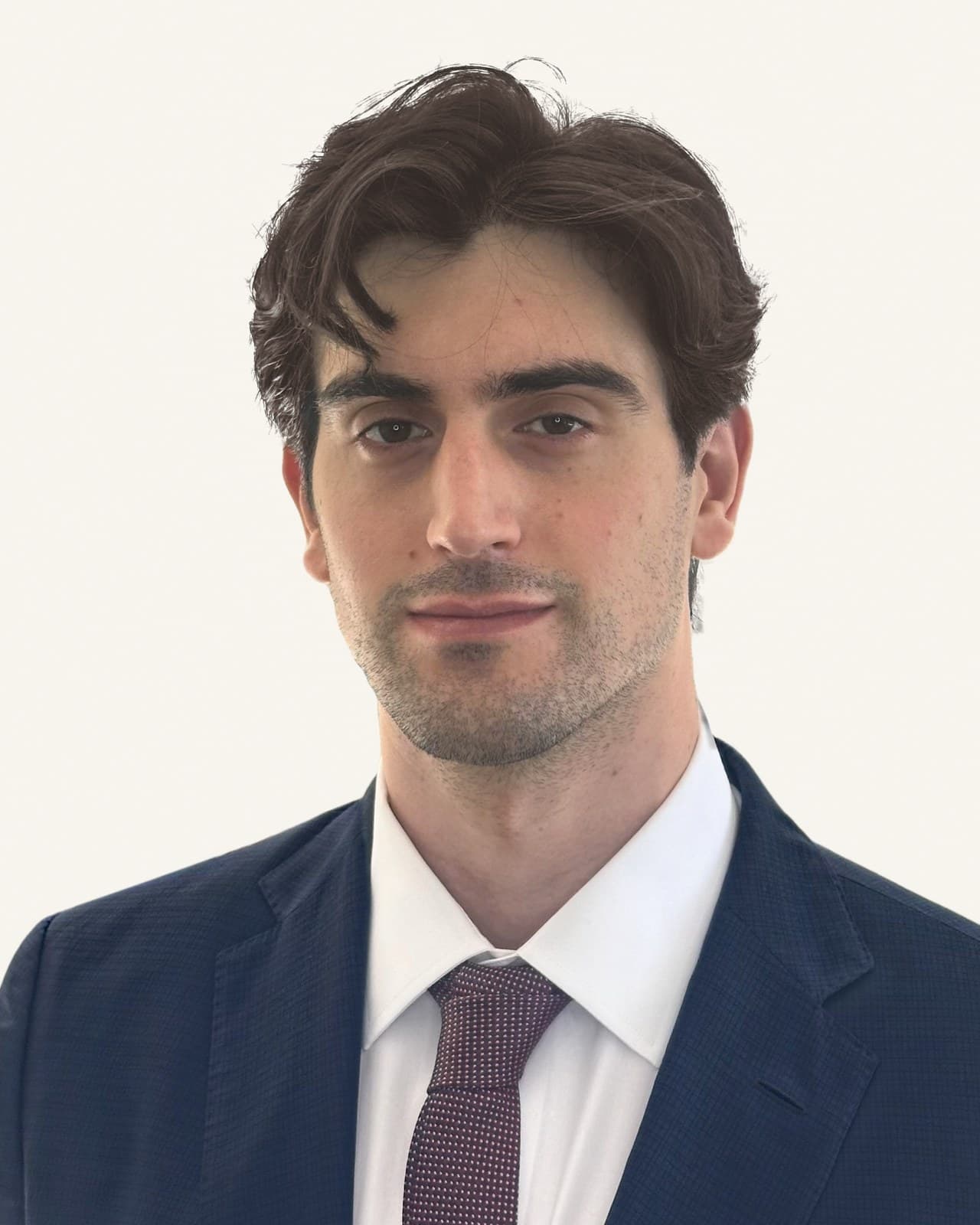
Luciano Fabbri Soto-Aguilar
Founder and Chief Investment Officer
CQF · Industrial engineer
Banco de Chile
Treasury desk: derivatives.
Bci
Market and liquidity risk models, and stress tests.
Itaú
International rates and currencies trader.
Athena
Founder and Chief Investment Officer.
Areas of Focus
- Interest Rate & FX Derivatives
- Quantitative Research and Systematic Strategies
- Risk Architecture & Portfolio Management
- Execution Infrastructure & Technology
He created Athena's business: he conceived its three service lines—investment management, research and technology—and took them from proposal to implementation. He designed the corporate and legal structure behind them and set the investment process and risk framework. He built the technology and execution infrastructure for algorithmic trading on which Athena operates, and the research process through which he developed the strategies the firm runs today.
Before Athena, he spent more than five years in treasury, trading and financial risk at three of Chile's leading banks. On Itaú's international trading desk he managed an international rates portfolio for the bank's own account, traded IRS, cross-currency basis swaps and G10 FX, and made markets in local rates. At Bci he developed and implemented the balance-sheet market and liquidity risk models, along with their stress tests. At Banco de Chile he worked in the treasury front office on derivatives implementation and validation. Seeing markets from both the risk side and a trading desk guides Athena's investment process.
He holds the Certificate in Quantitative Finance (CQF), awarded by the CQF Institute (London), with an 89% average, and a professional degree in Industrial Engineering from the Universidad de Concepción, where he graduated second in his class with highest distinction. He also completed the Diploma in Trading and Global Markets at RiskMathics.
A note from the founder
I built Athena to take full responsibility for how capital is invested. After more than five years inside banking, in market risk and on an international rates and currencies desk, I wanted to build something with a different mandate from a bank desk: an independent investment process, accountable for the capital behind every decision.
Read the full note ↓Show less ↑
Those years were formative. In risk, I learned to see markets through structure: exposure, limits, scenarios, the loss you can afford before you take it. On the desk, I learned how markets actually move: how flows, liquidity, and positioning shape prices in real time, and how the same market looks entirely different to a bank, a pension fund, an insurer, or a long-term investor, each acting under its own mandate and incentives. And I learned how different an idea feels once real capital stands behind it, a lesson no amount of study replaces.
Watching real risk play out taught me to hold two questions above almost everything else: what is the reason for a position, and where does it end? An opinion is not a strategy. A strategy has structure: a source of edge, a catalyst or signal, a size, a risk budget, an exit, a time horizon, and a defined role in the portfolio. For the kind of investment process I wanted to build, a position without an exit decided in advance is not a strategy; it is a hope. I built Athena so that no decision has to rely on hope in place of structure.
At Athena, edge comes first. By edge I do not mean a prediction or a market opinion; I mean a repeatable reason to take risk — a relationship, a behavior, an imbalance, a pattern, or a structural condition — that can be researched, tested, sized, and monitored. But edge alone is not enough: it has to be expressed with discipline, sized correctly, tested against adverse scenarios, and managed inside a broader portfolio. A great idea with poor structure can still fail; a defensive process with no edge rarely creates value. The work is to combine both.
That is why Athena is systematic in implementation but not dogmatic in its view. I do not believe models capture everything. I believe the opposite: markets are human, adaptive, and too complex for a single formula. A price reflects the expectations, fears, incentives, constraints, and biases of real people and institutions. Precisely because of that, a framework is necessary, not to replace judgment, but to protect it from our own wiring: loss aversion, overconfidence, the need to be right, and improvisation under pressure. A system does not remove uncertainty; it reduces the room for emotional decisions when uncertainty is highest.
We think of strategies as synthetic assets inside a portfolio. Each has its own behavior, its own correlation to the others and to the market, and a role in the whole. A strategy should seek to generate return, but it should also contribute to the architecture of the portfolio. The objective is not a pile of isolated trades; it is a coherent system of ideas, risks, correlations, and capital.
I am building Athena for individuals and families who want more than access to products. The market already offers banks, funds, advisors, and platforms. What I believe is still scarce, in Chile and Latin America especially, is diversification that is real, alternatives that are uncorrelated with each other, and the serious use of systematic strategies in how a portfolio is built. Access is not the same as architecture. The goal is not to own more products, but to build a portfolio where every exposure has a purpose, every risk is understood, and every strategy contributes to the whole.
I also believe a firm is defined in its hardest moments. When a strategy goes through a bad stretch, the standard cannot be improvisation, hidden risk, or excuses. It has to be clear communication, drawdown discipline, honest review, and loyalty to the process. No one can promise the absence of losses. What can be demanded is seriousness in how they are faced.
I am not building Athena on the claim that I am the smartest person in the room. What I can commit to is the work: the curiosity to keep searching for edge, the discipline to hold the process when it is uncomfortable, and the honesty to admit when I am wrong and correct it. Engineering, quantitative study, the CQF: those are tools, lenses for thinking more clearly. They are not the edge. The edge is built slowly, through work, humility before the market, and a refusal to stop improving.
Trust in Athena should rest on concrete things: the investment method, the terms of the mandate and the information each client can check against their broker.
Athena was born from a conviction: in markets, insight creates the opportunity, structure turns it into a strategy, and risk management allows it to endure.
Luciano Fabbri Soto-Aguilar, CQF
Founder and Chief Investment Officer
Talk to Athena.
Every question, comment or proposal to collaborate is welcome.